Ratko Mladić: No Glory in Genocide, No Honor in Glorifying War Crimes
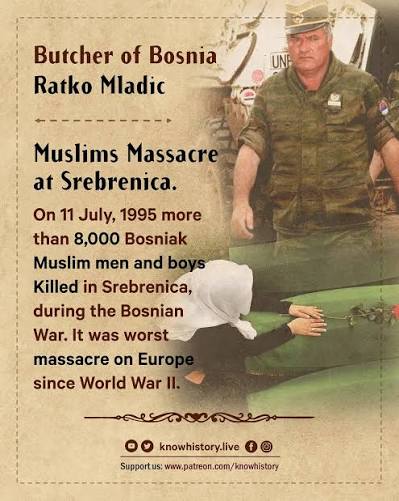
Ratko Mladić should be remembered not as a hero or a great military commander, but as a convicted war criminal whose name is inseparable from some of the darkest crimes committed in Europe since the Second World War.
The international tribunal convicted him of genocide at Srebrenica, as well as persecution, extermination, murder, deportation, forcible transfer, terror, unlawful attacks on civilians, and hostage-taking. These were not abstract accusations or simply the inevitable consequences of war. They involved deliberate campaigns against civilians, the terrorizing of Sarajevo through years of sniping and shelling, and the systematic destruction of the Bosniak population of Srebrenica.
Behind every legal term in that judgment were human beings: people murdered, families expelled from their homes, parents who lost children, children who lost parents, and communities whose suffering continues across generations.
That is why the continued glorification of Mladić is so disturbing. Praising a man convicted of genocide and crimes against humanity does not honor courage or patriotism. It diminishes the victims, distorts documented history, and turns atrocities into symbols of national pride. No nation needs to defend war criminals in order to defend its identity, and no community is strengthened by denying or celebrating the suffering of another.
The victims deserve remembrance without excuses. Survivors deserve dignity rather than mockery or denial. Future generations deserve an honest account of what happened rather than mythology built around those responsible.
Ratko Mladić received a life sentence. History should give him something equally unambiguous: condemnation for his crimes, remembrance of his victims, and rejection of every attempt to transform a convicted perpetrator of genocide into a hero.